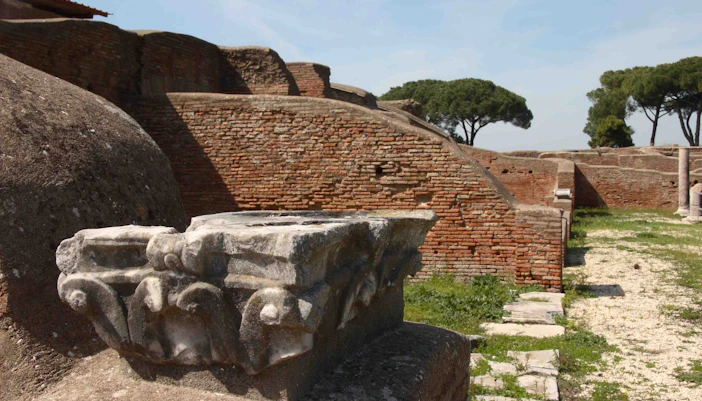
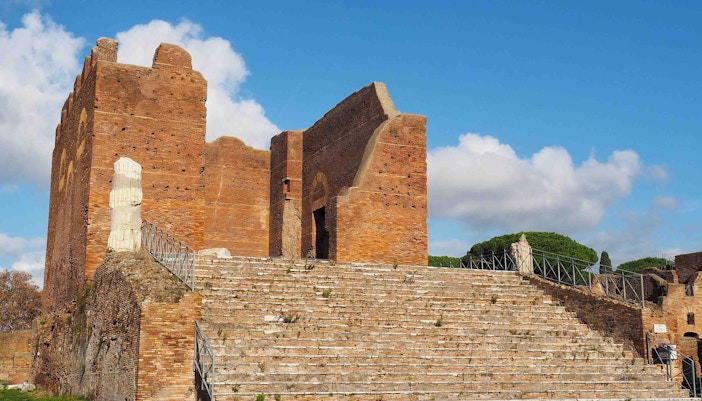
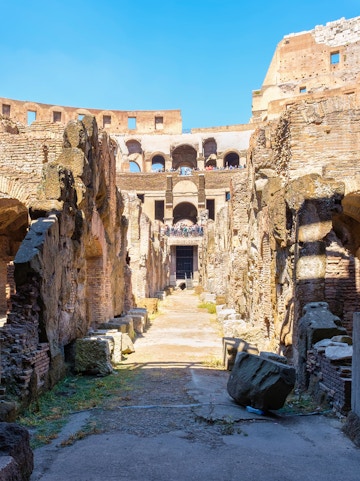
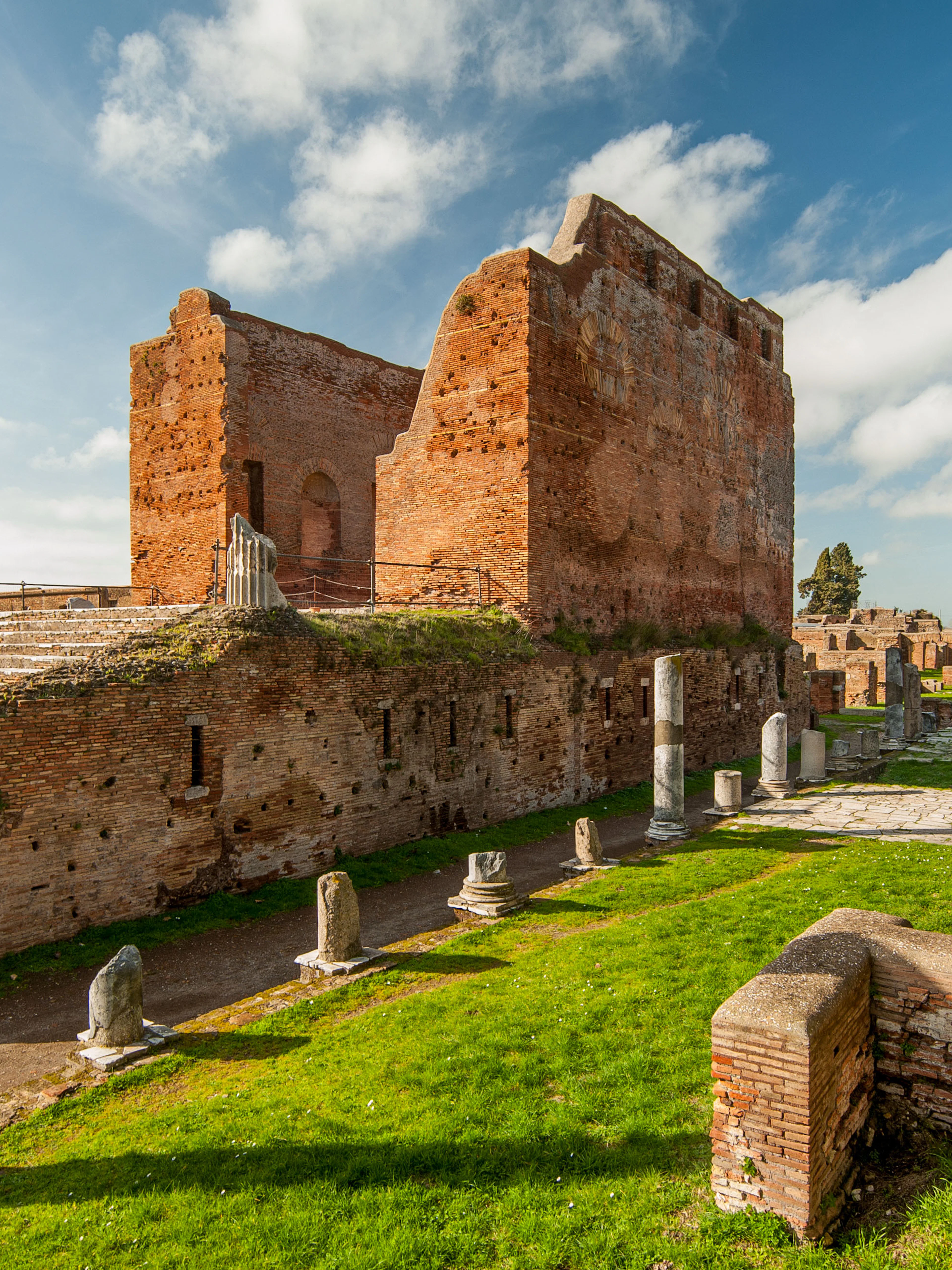
- Walk through ancient Rome’s harbour city: Ostia Antica was once the commercial gateway of Rome, where ships arrived with goods from across the Mediterranean. Today, its preserved streets reveal how ordinary Romans lived, worked, and worshipped.
- See everyday life frozen in stone: Unlike Rome’s grand temples and imperial landmarks, Ostia lets you step into homes, bakeries, baths, apartment blocks, theatres, and shops that show the daily rhythm of an ancient Roman city.
- Explore a quieter side of Roman history: Spread across a vast archaeological park, Ostia Antica offers open spaces, fewer crowds, and a slower pace compared to Rome’s busier attractions.
- An easy half-day escape from Rome: Located just outside the city, Ostia Antica is reachable by public transport, making it a convenient addition to a Rome itinerary without needing a full-day commitment.
How Headout makes choosing experiences effortless
We curate the best ways to experience
We research and organise all unique experiences - from tickets to tours to special combos - so you get all the choices without the clutter.
We partner with the best
Every supplier is vetted for quality, reliability, and value so you only get top rated experiences. No surprises, no disappointments.
All the best options, in one place
Each experience is thoughtfully organised to give you maximum availability, great value and an easy way to choose.
Book with complete peace of mind
Free cancellations, Flexible payments, and 24/7 support - thoughtfully designed for flexibility, assurance, and total peace of mind.
Slide 1 of 41/4
Slide 1 of 4


Overview
- Ways to explore: Choose between self-guided entry or guided tours that add historical context while helping you navigate Ostia Antica’s streets, theatres, baths, temples, and public spaces.
- What’s included: All ticket options give access to the archeological park and Museo Ostiense, where statues, inscriptions, and artefacts from excavations add context to the ruins.
- Guided value: Guided tours are useful if you want a structured route through the sprawling site. Options from Rome can also include return transport, saving you the effort of planning the journey.
- Queues & timing: Ostia Antica is a large open-air site where most visitors spend 3–5 hours exploring. Arrive earlier in the day, especially in warmer months, to make the most of your visit.
- When to book: Entry tickets are usually straightforward to arrange, but guided tours with fixed schedules and transport availability are better booked ahead during busy travel periods.
- Good to know: Wear comfortable shoes and expect uneven paths across the archaeological park. Ticket cancellation policies depend on the experience selected, so check your chosen option before booking.
- Best upgrade: Choose a guided tour from Rome if you want the history brought to life while covering the site’s highlights without worrying about transport logistics.
Why Visit Ostia Antica?
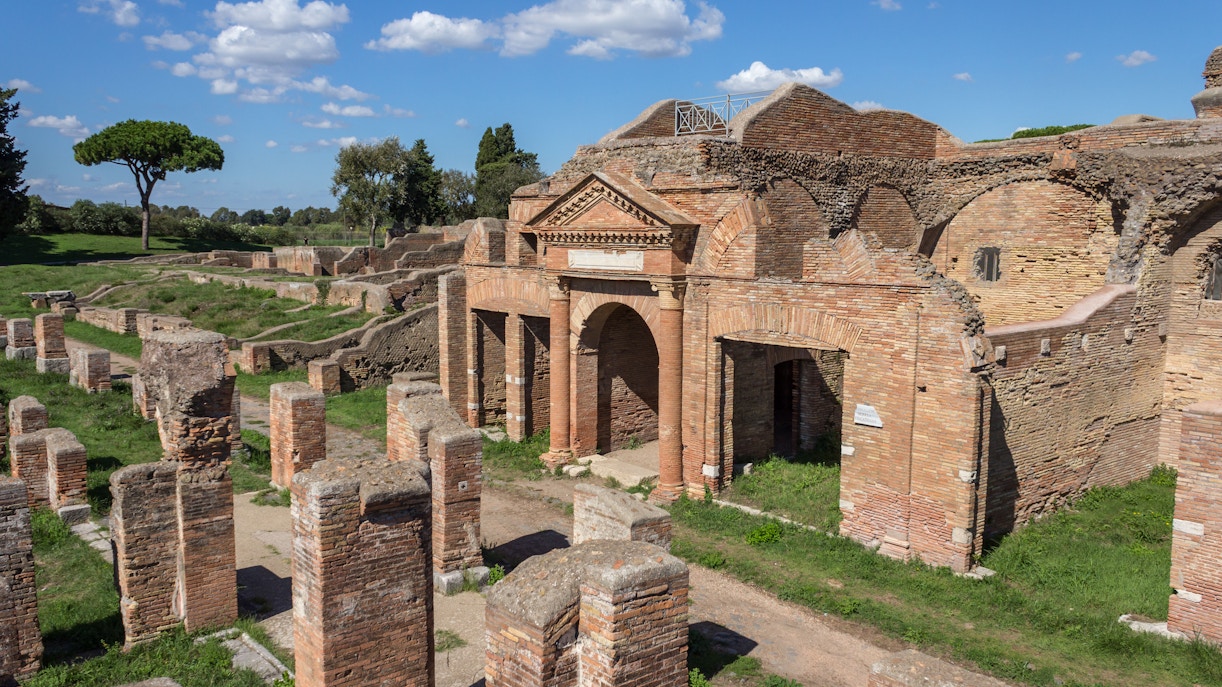
Discover the Rome that existed beyond the empire’s monuments
What to expect at Ostia Antica
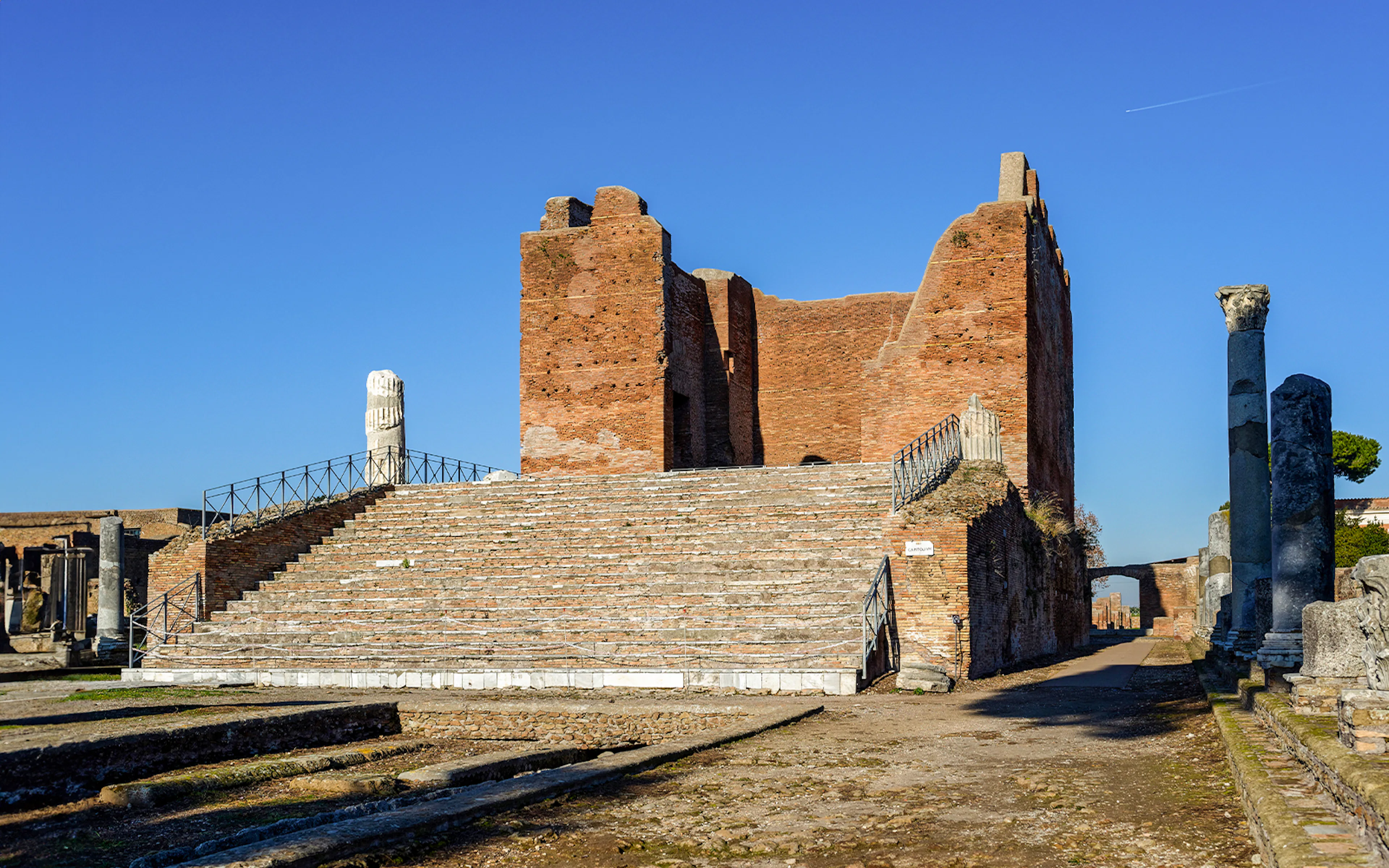
1/6
Walk into Rome’s ancient harbor city
Pass through the entrance of Parco Archeologico di Ostia Antica and step into the remains of Rome’s former port city. Wide stone streets, brick buildings, and open-air ruins unfold across a landscape that once connected Rome with Mediterranean trade.
Follow the Decumanus Maximus through everyday Roman life
Walk along the ancient city’s main road, lined with shops, public buildings, and residential blocks. Unlike ruins centred around a single monument, Ostia lets you trace the layout of an entire Roman town and see how people lived, worked, and moved through the city.
Discover theatres, baths, and spaces built for public life
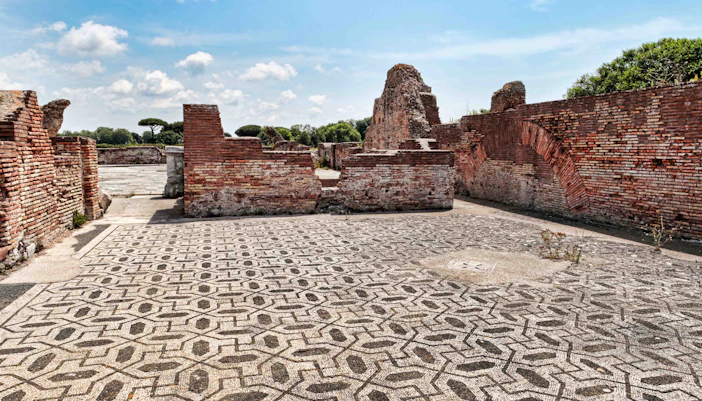
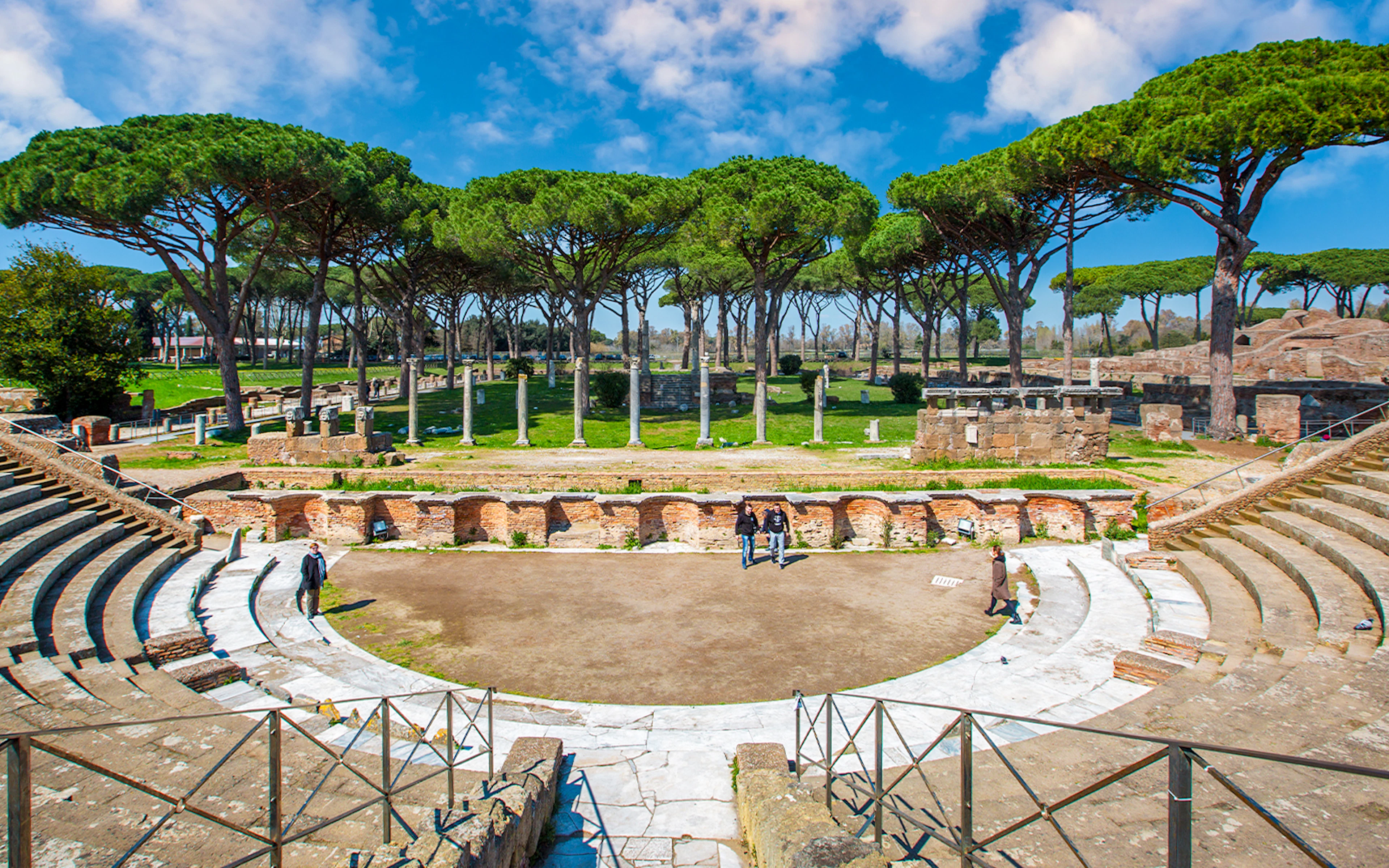
Explore the Teatro di Ostia, where stone seating still overlooks the archaeological park, and visit the Baths of Neptune with their preserved black-and-white mosaics. These spaces reveal how entertainment, bathing, and social life shaped daily routines in ancient Ostia.
Add context with a guided tour
A guided tour helps bring the scattered ruins together, explaining the purpose behind temples, warehouses, apartments, and public spaces. With a local guide, you can understand how Ostia functioned as a busy commercial centre rather than just a collection of ancient remains.
Step inside the homes and businesses of ancient Rome
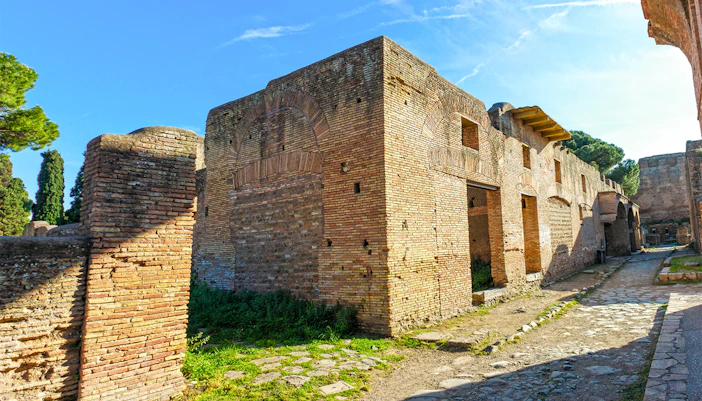
Explore multi-storey apartment buildings, taverns, bakeries, and shops that preserve details of ordinary Roman life. Spaces like the Insula of Diana and ancient thermopolia show how residents ate, traded, and lived nearly two thousand years ago.
Complete your visit at the Museo Ostiense
End your visit at the Museo Ostiense, where statues, inscriptions, funerary pieces, and other finds from the excavations add more detail to the city you have just explored. Most visitors spend around 3–5 hours discovering the archaeological park and museum.
Which Ostia Antica ticket is best for you?
| Ticket type | What's included | Best for | Price from |
|---|---|---|---|
Standard entry ticket | Entry to Ostia Antica; optional audio guide | • Flexible pacing • Full freedom to explore | €18 |
Small-group guided tour | Skip-the-line entry + English-speaking guide • Group capped at 12 | • Expert context • Curated route • Less navigation | €55.25 |
Your Ostia Antica Tickets Explained

Entry Ticket
Explore the archaeological park at your own pace with direct entry to Ostia Antica’s ancient streets, public buildings, temples, baths, and theatre.
- Walk through one of Rome’s best-preserved harbour cities and discover mosaics, frescoes, and ruins that reveal everyday Roman life.
- Choose this option if you prefer exploring independently and setting your own pace.
Recommended Experience: Ostia Antica Entry Ticket
Guided Tour
Discover the stories behind Ostia Antica’s ruins with a local guide who brings its ancient streets, buildings, and daily life back into context.
- Follow a curated route through key highlights like the theatre, Forum, baths, and ancient residential areas.
- A guided experience helps you understand details you might miss while exploring the vast archaeological park alone.
Recommended Experience: Ostia Antica Small-Group Guided Tour with Entry Tickets
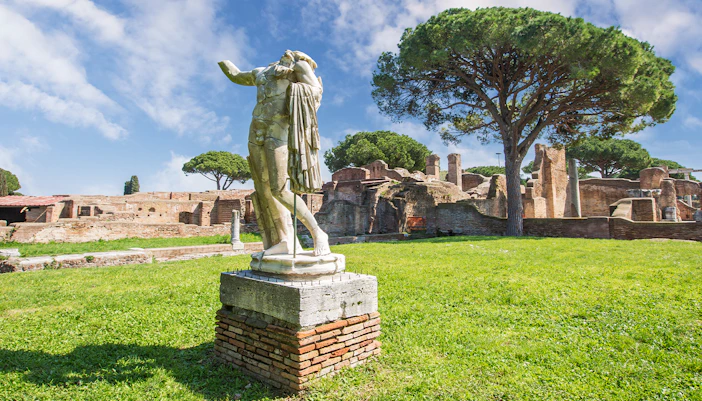
Half-Day Tour from Rome
Combine your Ostia Antica visit with convenient transfers from Rome for a smoother day trip experience.
- Travel from central Rome with transport arranged and explore the archaeological park with a guide.
- Ideal if you want to avoid planning train connections and focus entirely on discovering the ruins.
Recommended Experience: Ostia Antica Half-Day Tour from Rome
Things to know before booking your Ostia Antica tickets
Booking window
- Ostia Antica is easier to plan than Rome’s busiest landmarks, but guided tours have limited group availability. Book a few days ahead during weekends and peak travel months to secure your preferred time slot.
- If you are visiting from Rome, plan your transport before booking. Some guided options already include round-trip train or coach transfers, saving you the hassle of arranging connections.
Entry & access
- Tickets include entry to the archaeological park, but they do not work like skip-the-line passes. All visitors still enter through the main gate and follow standard security procedures.
- Arrive with buffer time if joining a guided tour from Rome. Transfer-based experiences usually follow fixed departure timings, so late arrivals may mean missing the group.
What’s included
- Standard park access covers the main archaeological area and Museo Ostiense. You can explore ancient streets, residential buildings, temples, baths, theatres, and public spaces that reveal daily Roman life.
- Guided options add historical context that self-guided visitors may miss. Tours typically focus on major highlights such as the Teatro di Ostia, Baths of Neptune, and Piazzale delle Corporazioni.
Ticket discounts & requirements
- Free admission: EU visitors under 18 years old and eligible visitors with disabilities (along with their companions where applicable) can enter free of charge with valid ID/documentation.
- Reduced tickets: Reduced-price admission is available for eligible visitors aged 18–25 from EU countries.
- Carry valid identification: Discounted and free-entry visitors must present valid proof of eligibility at the entrance.
Ways to explore
- Self-guided visits work well if you prefer exploring at your own pace. The archaeological park is spread across a large area, so allow around 3–5 hours to see the major sections comfortably.
- Guided tours help you understand how Ostia functioned as Rome’s harbour city. A guide connects individual ruins — from warehouses and apartments to temples and baths — into the story of a working Roman town.
- Small-group options offer a more focused experience. The semi-private tour keeps the group size limited, allowing more interaction with the guide while exploring the site.
Transfers & logistics
- Coming from Rome? Choose a tour with transport included if you want a simpler day trip. Some experiences include round-trip train tickets or coach transfers, avoiding the need to navigate connections yourself.
- Travelling independently is also straightforward. The Roma-Lido train from Porta San Paolo/Piramide reaches Ostia Antica station, followed by a short walk to the entrance.
Policies & accessibility
- Expect uneven terrain throughout the archaeological park. Ancient streets, gravel paths, and exposed ruins make some areas difficult for visitors with limited mobility.
- Wear comfortable shoes and plan for outdoor walking. Much of the visit takes place outdoors with limited shade across the archaeological area.
Explore Ostia Antica
1/6
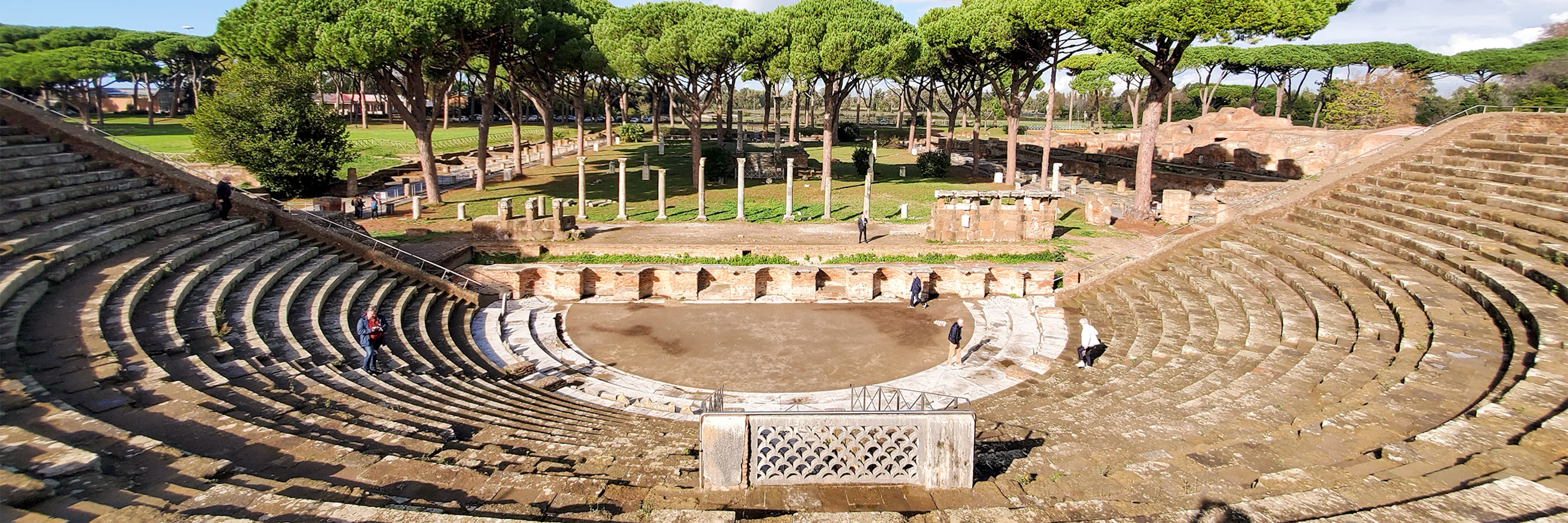
Teatro di Ostia
Location: Near the Decumanus Maximus, close to the Piazzale delle Corporazioni
Climb the stone seating of Ostia’s ancient theatre and look across the ruins from the same public space where Romans once gathered for performances. Its preserved structure reveals the importance of entertainment in daily city life.
Access: Yes (Included with archaeological park entry)
Decumanus Maximus
Location: Runs through the centre of the archaeological park
Follow Ostia’s main ancient road past shops, public buildings, and residential blocks. Walking this route gives you the clearest picture of how a Roman harbour city functioned beyond individual monuments.
Access: Yes (Included with archaeological park entry)
Baths of Neptune
Location: Near the Decumanus Maximus
Discover one of Ostia’s most recognisable mosaics: Neptune surrounded by marine creatures in a preserved bath complex. The artwork remains in its original setting, showing how Romans combined architecture, decoration, and public life.
Access: Yes (Included with archaeological park entry)
Piazzale delle Corporazioni
Location: Behind the Teatro di Ostia
Explore the former trading centre where merchant offices surrounded a courtyard decorated with black-and-white mosaics. The inscriptions and symbols reveal Ostia’s role as Rome’s commercial gateway to the Mediterranean.
Access: Yes (Included with archaeological park entry)
Insula of Diana
Location: Along the central streets of Ostia Antica
Step into one of Ostia’s best-preserved apartment buildings and see how ordinary Romans lived in multi-storey urban homes. Balconies, shops, and residential spaces reveal the city’s everyday rhythm.
Access: Yes (Included with archaeological park entry)
Museo Ostiense
Location: Near the entrance of the archaeological park
Complete your visit with statues, inscriptions, funerary reliefs, and archaeological finds discovered across Ostia. The museum adds context to the streets and buildings you have explored outside.
Access: Yes (Included with archaeological park entry)
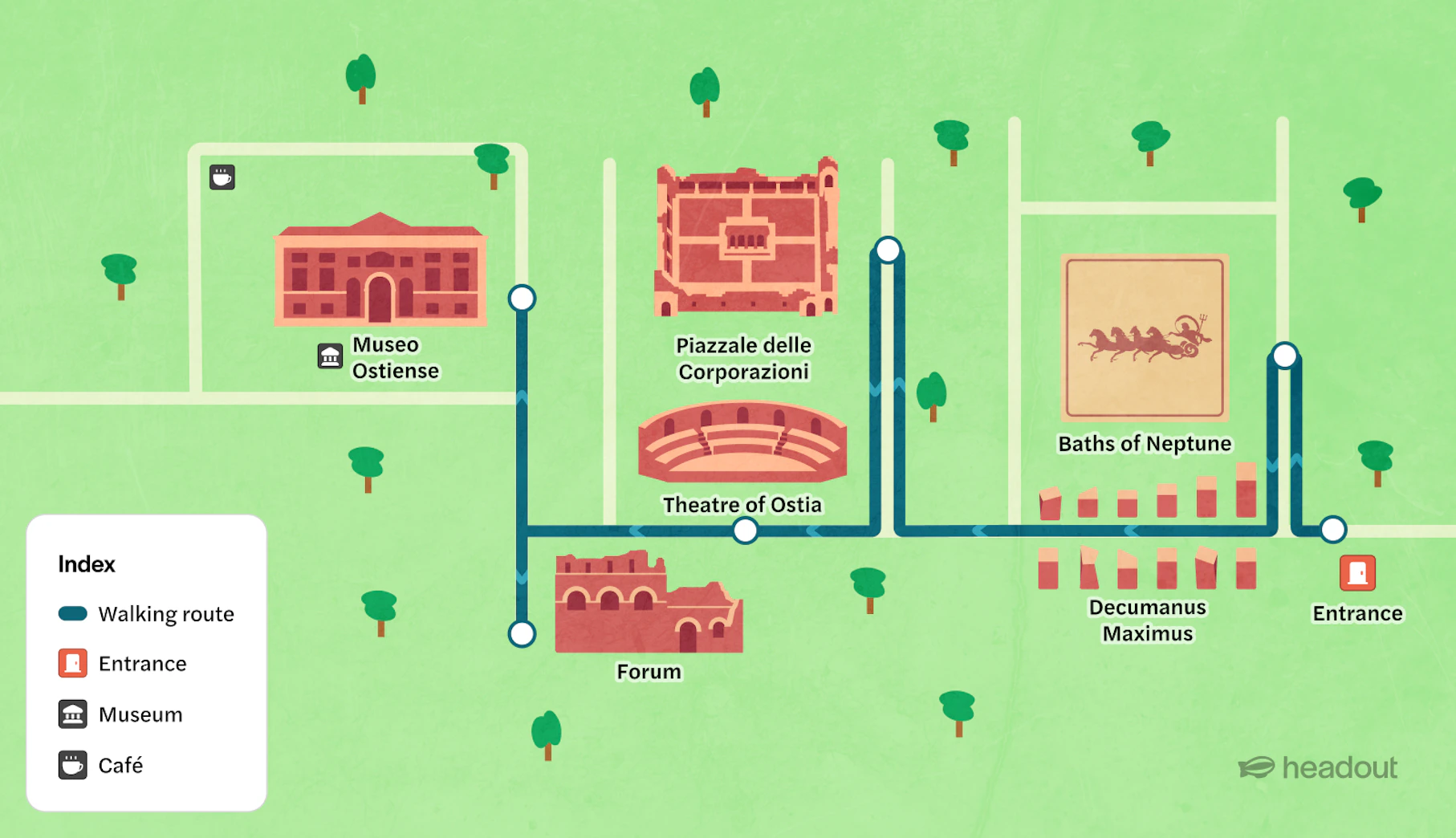
Ostia Antica Map
Understand the layout of the ancient city before you explore: The map helps you locate key areas like the Theatre, Forum, Baths of Neptune, Decumanus Maximus, and Museo Ostiense. Use it to plan your route through the ruins and make the most of your visit.
Plan your visit to Ostia Antica
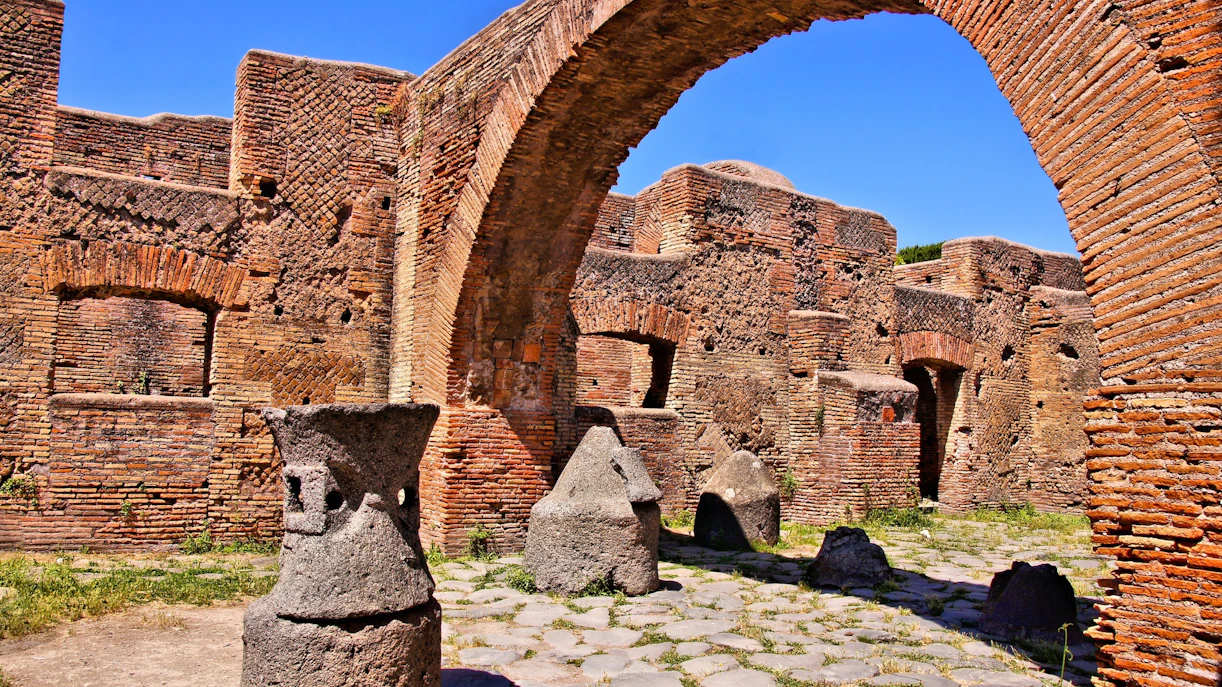
- Opening hours vary by season, so check the schedule before visiting. The archaeological park generally opens in the morning and closes in the late afternoon or evening, with the last entry allowed before closing time.
- Best time of day: Arrive early in the morning to explore the open-air ruins before the heat builds up, especially in summer.
- Best season: March–May and September–November offer comfortable temperatures for walking through the large archaeological site.
Located southwest of Rome near the modern town of Ostia Antica, the archaeological park preserves the remains of Rome’s ancient harbour city and is easily reached by public transport.
Address: Viale dei Romagnoli 717, 00119 Roma RM, Italy [Find on Maps]
Getting there
- By train: Take the Roma-Lido line from Roma Porta S. Paolo (Piramide Metro Station). Get off at Ostia Antica station, then walk around 8–10 minutes to the entrance.
- By metro: Take Metro Line B to Piramide, then change to the Roma-Lido railway line.
- By taxi: A taxi from Fiumicino Airport takes around 20–30 minutes depending on traffic.
- By car: Drive via Via del Mare or Via Ostiense. Limited street parking is available near Viale dei Romagnoli.

Facilities are concentrated near the main entrance, so plan ahead before entering the archaeological area.
- Toilets: Available near the entrance area and within the archaeological park.
- Café/bar: A café near the entrance serves snacks and drinks for a quick break during longer visits.
- Information desk: Available at the entrance for visitor assistance and site information.
- Bookshop: Located near the entrance area, offering books and souvenirs related to Ostia Antica.
- Audio guides: Available with select tickets to help explore the ruins at your own pace.
- Museum: Museo Ostiense displays statues, inscriptions, and artefacts discovered during excavations.

Ostia Antica has limited accessibility due to its ancient streets, uneven surfaces, and large open-air layout.
- The entrance area is relatively flat and accessible.
- The archaeological park contains uneven paving, gravel paths, and ancient stone roads that can be difficult for wheelchair users and visitors with mobility challenges.
- Some accessible routes are available, but not all areas of the site can be reached easily.
- The Museo Ostiense has accessibility facilities, including an access ramp.
Visitors with mobility concerns should plan extra time and check the latest accessibility information before visiting.
Tips & guidelines
- Start early to explore more: Ostia Antica covers a large archaeological area, so arrive in the morning to comfortably explore the main streets, baths, temples, and houses without rushing.
- Wear comfortable shoes: Ancient Roman roads are uneven, with cobblestones and gravel paths across much of the site. Comfortable footwear makes longer walks easier.
- Pick up the free map: Use the site map at the entrance to plan your route and locate key areas like the Theatre, Forum, Baths of Neptune, and House of Diana.
- Bring water and sun protection: Much of Ostia Antica is outdoors with limited shade. Carry water, sunscreen, and a hat, especially during summer visits.
- Use an audio guide for context: Many ruins are open spaces with limited signage. An audio guide helps explain the buildings, mosaics, and daily life of this former Roman port city.
- Respect the ruins: Do not climb on structures, touch mosaics or frescoes, or enter restricted areas. Photography is allowed, but avoid using flash where prohibited.
- Plan transport back: Trains from Ostia Antica station connect you to Rome, but check return timings in advance, especially if you stay until closing hours.
- Visit the museum: Set aside time for the Museo Ostiense to see statues, inscriptions, and artefacts discovered during excavations.
Extend Your Ostia Antica Visit
Borgo di Ostia Antica
Why include: It is visually strong and directly next to the archaeological park.
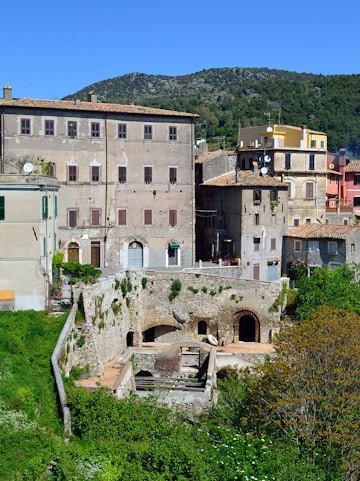
Step outside the archaeological park and enter the medieval village of Ostia Antica, a quiet historic settlement built around the Castle of Julius II. Walk through narrow streets, small squares, and stone buildings that show a completely different chapter of the area’s history after ancient Rome.
Castello di Giulio II
Why include: Strong historical connection — continues the Roman story.
Located beside the medieval village, this Renaissance fortress was built in the late 15th century to protect the area around the Tiber River. Its brick towers, defensive walls, and courtyard offer a glimpse into Ostia’s later history beyond its Roman ruins.
Necropoli di Porto
Why include: Strong historical connection — continues the Roman story.
Explore one of the most important Roman burial areas near Ostia Antica, where ancient tombs line the roads leading toward the former harbour settlements. The preserved inscriptions, mosaics, and burial structures reveal how Romans honoured and remembered their dead.
Lido di Ostia
Why include: Good for travellers who want to combine history + relaxation.
End your archaeological visit by heading to Lido di Ostia, Rome’s seaside district just a short journey away. Its beachfront promenade, restaurants, and Mediterranean atmosphere make it an easy place to unwind after walking through Ostia Antica’s extensive ruins.
Frequently asked questions about Ostia Antica tickets
Standard tickets include entry to the Ostia Antica Archaeological Park, allowing you to explore ancient streets, temples, baths, theatres, and preserved Roman buildings.
A standard ticket lets you explore independently, while guided tours add expert commentary and explain the history behind ruins, mosaics, and daily Roman life.
Yes, most entry tickets include access to the Museo Ostiense, where you can see statues, inscriptions, and artefacts discovered during excavations.
Yes, audio guides are available with select tickets and help explain key ruins, mosaics, and landmarks as you explore at your own pace.
Book a few days ahead during busy periods to secure availability. Guided tours and experiences with transfers may require earlier booking.
Yes, tickets are available onsite, but booking online helps you avoid queues and secure your preferred experience.
Plan around 3–4 hours for the main highlights. Visitors exploring the full archaeological park and museum may need more time.
The easiest option is taking the metro and Roma-Lido train. Guided tours may include round-trip transfers from central Rome for added convenience.
Yes, especially for first-time visitors. The site has limited signage, and a guide helps you understand the purpose of buildings, streets, and public spaces.
Highlights include the Roman Theatre, Forum, Baths of Neptune, House of Diana, Thermopolium, and Forum of the Corporations.
Yes, Ostia Antica is around 30 km from central Rome and can be visited as a half-day trip before returning to the city.
Cancellation depends on the ticket type. Check the cancellation policy of your chosen experience before booking.
Some accessible routes are available, but uneven Roman roads, gravel paths, and ancient structures can make parts of the site challenging.
Yes, the archaeological park has toilets, a bookshop, and visitor facilities. Carry water and snacks as the site is large with limited food options.
Wear comfortable walking shoes and bring sun protection. Much of the archaeological park is outdoors with limited shade.